

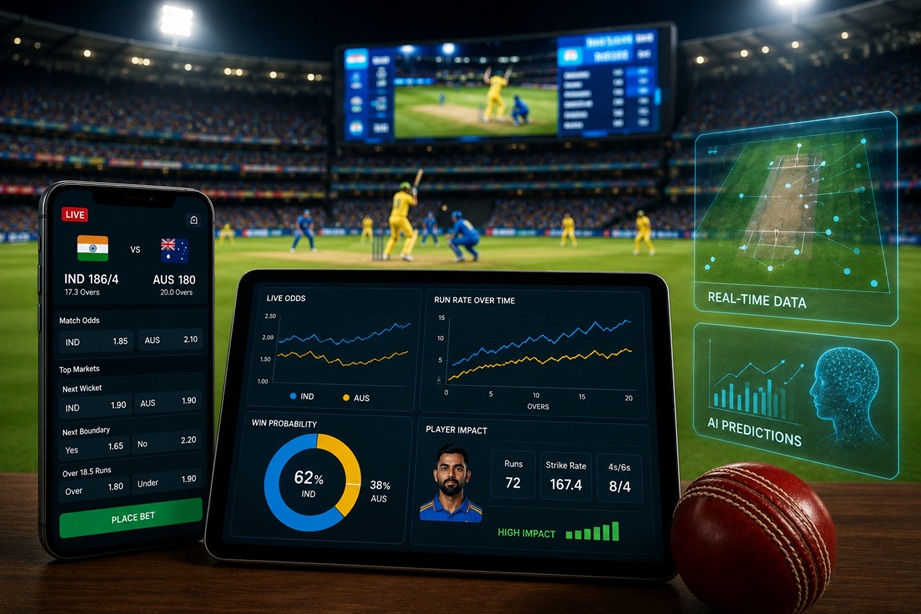
The Impact of Real-Time Data on Sports Betting
The sports betting landscape has undergone a profound revolution over the last decade. What was once a static, pre-game activity governed by morning newspapers and fixed odds has evolved into a high-speed digital ecosystem running on real-time data feeds. Instantaneous telemetry, advanced tracking technology, and high-speed data transmission have fundamentally changed how sportsbooks set odds, how bettors evaluate opportunities, and how live events are consumed.
Real-time data forms the core foundation of modern wagering. It powers dynamic odds engines, enables micro-betting markets, enhances risk mitigation for operators, and provides analytical tools to bettors. Understanding how live data flows through the sports betting ecosystem reveals how technology continues to redefine sports engagement.
The Evolution from Pre-Match Odds to In-Play Markets
Historically, sportsbooks published point spreads and moneyline odds hours or days before a match began. Once the opening whistle blew, betting boards locked, and spectators simply watched the outcome unfold. This model suited traditional bookmaking, where odds calculations relied on static historical records, season averages, and manual adjustments.
The introduction of high-speed digital infrastructure disrupted this legacy structure. Fast data integration allows operators to adjust odds instantaneously in response to live on-field events.
-
Continuous Pricing: Bookmakers continuously adjust odds based on real-time game states, clock updates, possession shifts, and score changes.
-
Volume Growth: Live, in-play betting accounts for a significant portion of total handle for online sportsbooks in mature markets worldwide.
-
Granular Market Expansion: Instantaneous data feeds allow platforms to offer hundreds of specialized micro-markets beyond simple game-winner predictions.
How Real-Time Data Transmission Works
Delivering instant data from a stadium floor to a smartphone screen in milliseconds requires a sophisticated technological pipeline. A fraction of a second in latency can mean the difference between a fair wager and a system open to market exploitation.
Stadium Telemetry and Official Data Collection
Modern sports venues are equipped with advanced optical tracking cameras, wearable player sensors, and official statisticians stationed courtside or pitchside. These systems capture detailed positional metrics, ball velocity, distance covered, and immediate game events. Official league data feeds are packaged and transmitted globally within milliseconds to authorized sportsbooks and technology vendors.
Algorithmic Processing and Automated Odds Engines
Once captured, raw live data enters proprietary algorithmic models operated by bookmakers or specialized trading providers. These predictive models re-calculate win probabilities instantly, adjusting lines across dozens of related markets simultaneously. Automated odds engines process inputs such as current score, time remaining, field position, weather shifts, and historical situational performance to post updated prices without human delay.
The Expansion of Micro-Betting and In-Play Markets
The most visible impact of real-time data on consumer behavior is the rise of micro-betting. Micro-betting involves wagering on discrete, instantaneous sub-events within a sporting match rather than the overall final outcome.
-
Baseball Micro-Markets: Wagering on the outcome of the very next pitch, such as ball, strike, or hit, as well as the speed or pitch type thrown.
-
Football Micro-Markets: Predicting the exact outcome of an upcoming drive, the result of the next play, or whether a pass attempt will be completed.
-
Basketball Micro-Markets: Betting on whether the next possession will yield a two-pointer, three-pointer, turnover, or missed shot.
-
Tennis Micro-Markets: Wagering on the winner of the immediate next point, fault occurrences, or ace probabilities during a single game.
Micro-betting appeals directly to younger, digitally native audiences accustomed to fast-paced interactive media. It turns every possession, drive, or pitch into an isolated, actionable event, keeping users engaged throughout the duration of a contest.
Enhancing the Bettor Analytical Toolset
Real-time data does not merely benefit sportsbook operators; it equips sports bettors with sophisticated analytical capabilities. Modern wagering apps integrate live graphical representations, interactive field diagrams, and real-time statistical dashboards directly into the user interface.
Bettors can evaluate live momentum shifts, expected goals metrics, possession percentages, and player fatigue indicators as events happen. Access to real-time analytics allows bettors to spot pricing discrepancies where automated algorithms might overestimate or underestimate the impact of a specific on-field event.
Operational Advantages for Sportsbook Operators
From a business perspective, real-time data serves as an essential risk-management and profit-optimization tool for sportsbook operators.
Risk Mitigation and Automated Suspensions
When a critical play occurs, such as a penalty kick in soccer, a red-zone turnover in football, or an injured star player leaving the court, risk algorithms instantly freeze or suspend relevant markets. High-speed data connections prevent latency arbitrage, where court-siders or automated bots attempt to place bets on events that have occurred in real life but have not yet registered on delayed broadcast streams.
Yield Optimization and Margin Stability
Real-time data allows operators to maintain balanced liability across different outcomes. By tracking incoming bet flow alongside live game probabilities, automated systems adjust prices to encourage balanced action on both sides of a market, helping secure the operator’s built-in margin regardless of the game’s final result.
Challenges and Technical Hurdles in Real-Time Data Delivery
Despite massive technical advances, integrating real-time data into sports betting presents ongoing operational challenges.
-
Broadcast Latency Gaps: Traditional television broadcasts and over-the-top streaming services often run on delays ranging from five to thirty seconds behind live action. This delay creates a disconnect for bettors watching a stream while attempting to place live wagers on real-time odds boards.
-
Data Integrity and Official Sourcing: Unofficial, unverified data feeds increase the risk of errors or deliberate manipulation. As a result, major sports leagues aggressively license official data feeds to ensure accuracy, protect game integrity, and create fresh revenue streams.
-
System Infrastructure Load: Processing thousands of data points per second during high-volume sports events requires immense server infrastructure, strong cybersecurity defenses, and zero-downtime database architecture.
Frequently Asked Questions
What is the difference between standard live betting and micro-betting?
Standard live betting involves wagering on traditional game outcomes, such as point spreads, moneylines, or total points, while the event is currently in progress. Micro-betting focuses on immediate, granular sub-events within the game, such as the outcome of a single pitch, pass play, or tennis point.
How do sportsbooks prevent bettors at the stadium from exploiting line delays?
Sportsbooks utilize official, direct stadium data feeds transmitted via low-latency networks that report events in under a second. Additionally, platforms apply short processing delays to live bet submissions, allowing automated systems to detect on-field events and suspend markets before a court-side bet can be processed.
Why do live betting odds change so quickly during a match?
Live betting odds update rapidly because automated algorithms continuously re-calculate win probabilities based on new data inputs. Changes in time remaining, score, field position, possession, momentum shifts, and player statistics automatically trigger adjustments across all connected betting markets.
What is latency, and why is it important in live sports betting?
Latency refers to the time delay between an action happening on the field and that information being registered by the sportsbook’s server or displayed on a user’s screen. Minimal latency is critical to ensure fair pricing, prevent market manipulation, and deliver a smooth user experience.
Do sports leagues profit from real-time betting data?
Yes, major professional sports leagues generate significant revenue by licensing their official real-time data feeds directly to sportsbooks and sports data distribution companies. Official partnerships ensure operators receive verified, low-latency data while providing leagues with a share of the sports betting economy.
Why are live markets sometimes temporarily suspended during a game?
Live markets are suspended when significant events occur that drastically alter game probabilities, such as a scoring play, turnover, penalty call, video review, or player injury. Markets freeze temporarily so algorithms can re-evaluate the situation and establish updated, accurate pricing.
Can a slow internet connection affect my ability to place live wagers?
Yes, a slow or unstable internet connection increases latency between your device and the sportsbook server. If the odds change or the market freezes while your bet is transmitting, your wager will likely be rejected or subject to a re-quote at updated odds.
add a comment