

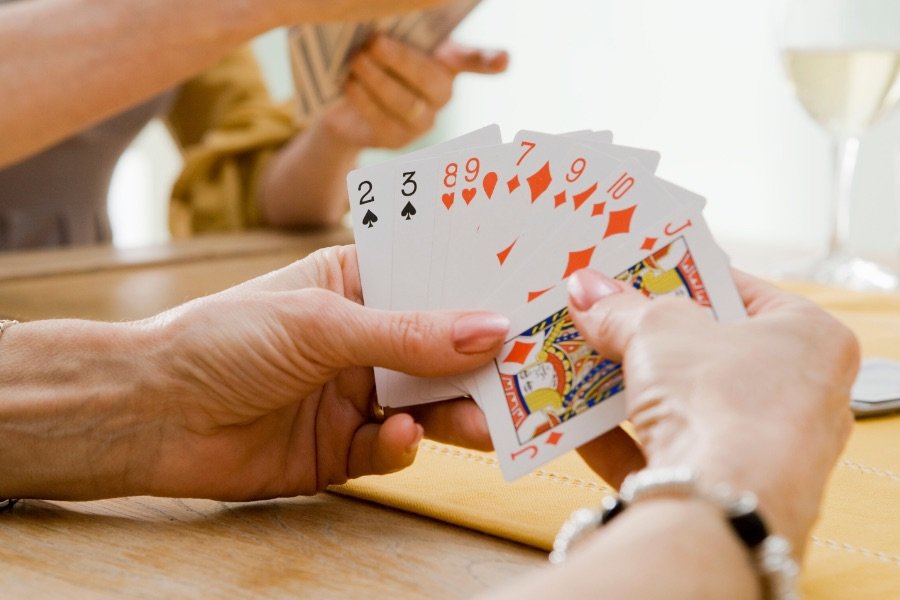
Blackjack, also known as 21, has captivated players for centuries with its unique blend of strategy, skill, and chance. Whether played in the luxurious ambiance of a high-end casino or in the comfort of one’s home, the game’s appeal remains constant. Its simplicity, combined with the opportunity to influence the outcome through decision-making, has cemented Blackjack as one of the most enduring card games in the world. This article explores the game’s rich history, its rules and mechanics, strategies for success, and why it continues to hold a special place in the hearts of players.
The Origins of Blackjack: A Historical Overview
The roots of Blackjack can be traced back to the 17th century, with early variations of the game appearing in France. The game “Vingt-et-Un” (French for “Twenty-One”) was popularized in French casinos, where players would aim to achieve a hand value of 21 without going over. The game’s mechanics were strikingly similar to modern Blackjack, with the objective being to get as close to 21 as possible.
As the game spread across Europe and eventually to the United States, it underwent several transformations. In the early 20th century, American casinos introduced special payouts for specific card combinations, notably the Ace of Spades and the Jack of Spades, which became known as “Blackjack.” While the special payout was eventually discontinued, the name “Blackjack” remained, and the game evolved into the version we recognize today.
How Blackjack Is Played: Simple Rules, Complex Strategies
Blackjack is often celebrated for its straightforward rules, which make it accessible to beginners while still offering depth for more experienced players. The game is typically played with one or more decks of standard 52 playing cards. Each card holds a specific value:
-
Number cards (2–10) are worth their face value.
-
Face cards (Jack, Queen, King) are each worth 10 points.
-
Aces can be valued at either 1 or 11, depending on the player’s preference and hand.
The objective is to have a hand value as close to 21 as possible, without exceeding it. Players are dealt two cards at the beginning of the round, with one of the dealer’s cards facing up. Players must then decide whether to “hit” (draw another card) or “stand” (keep their current hand). If a player’s hand exceeds 21, they “bust” and lose the round.
In addition to hitting or standing, players have other options:
-
Double Down: The player doubles their original bet and receives exactly one more card.
-
Split: If the player is dealt two cards of the same value, they can split them into two separate hands and continue playing both hands independently.
-
Surrender: In some games, players may choose to forfeit half their bet and end their participation in the round early.
Once all players have completed their actions, the dealer reveals their hidden card. The dealer must follow strict rules: they must hit until their hand totals at least 17 and stand on 17 or higher.
The Strategic Elements of Blackjack: Skill Over Pure Luck
Unlike many casino games, Blackjack is not purely based on luck. While the cards are dealt randomly, the outcome of the game is heavily influenced by the decisions made by the player. Understanding the fundamental strategies behind the game can significantly improve a player’s odds of winning.
Basic Strategy: The Foundation of Success
At its core, Blackjack strategy revolves around making mathematically optimal decisions based on the cards you hold and the dealer’s upcard. The most widely accepted method of play is called “basic strategy,” a set of rules designed to reduce the house edge as much as possible. Some key elements of basic strategy include:
-
Standing on 17 or higher: If the player’s hand totals 17 or more, it is generally wise to stand, as the risk of busting by hitting is too great.
-
Hitting on 8 or lower: With a low total, it’s better to hit and improve the hand rather than standing and risking a weak hand.
-
Doubling down on 11: If the player’s total is 11 and the dealer’s upcard is weak (such as a 4, 5, or 6), it is usually wise to double down and increase the bet.
-
Splitting Aces and 8s: Always split Aces and 8s. Splitting Aces gives the player a chance to hit two Blackjacks, while splitting 8s improves the chances of landing a stronger hand.
While basic strategy cannot guarantee a win, it minimizes the house edge, which can be as high as 1-2% when employed correctly.
Advanced Strategies: Card Counting and Betting Systems
For more experienced players, Blackjack offers opportunities to apply advanced strategies that can tilt the odds in their favor. One of the most well-known techniques is card counting, which involves keeping track of the high and low cards that have been dealt. When there are more high cards (10s, face cards, and Aces) remaining in the deck, the player’s odds of getting a Blackjack increase. By adjusting their bets accordingly, card counters aim to capitalize on favorable situations.
While card counting is not illegal, it is discouraged by casinos, and players who are caught counting cards may be asked to leave or banned from the casino. To combat this, many casinos use multiple decks of cards and shuffle them frequently.
Another popular advanced strategy is the use of betting systems, such as the Martingale system, where players double their bet after each loss, with the hope that they will eventually win and recover their losses. However, betting systems are inherently risky, and players should exercise caution when using them.
The Role of Psychology in Blackjack: Reading the Dealer and Other Players
Beyond the cards and strategy, Blackjack involves a psychological aspect that can influence the outcome of the game. One of the most important psychological skills is reading the dealer. A dealer’s body language, facial expressions, and behavior can provide subtle clues about the state of their hand. While this is not foolproof, experienced players can sometimes detect when the dealer is likely to bust or whether they are holding a strong hand.
Players may also engage in psychological tactics to influence the behavior of other players at the table. In multi-player Blackjack, players can sometimes make strategic moves that may not necessarily benefit their own hand but can disrupt the dealer’s or another player’s game. However, such tactics are often frowned upon in casinos and can lead to penalties or removal from the game.
The Evolution of Blackjack: From Casinos to Online Platforms
Over the years, Blackjack has evolved from a popular casino game to a global phenomenon, both in land-based and online formats. The advent of online casinos has made Blackjack more accessible to players around the world, allowing them to enjoy the game from the comfort of their homes. Online Blackjack offers various versions of the game, including live dealer Blackjack, where players can interact with a real dealer via a video stream, enhancing the authentic casino experience.
Mobile technology has also played a crucial role in expanding Blackjack’s reach. Today, players can play on smartphones and tablets, ensuring that the game remains relevant and accessible to a broader audience.
Why Blackjack Endures: A Game of Ageless Appeal
Blackjack’s enduring popularity is no accident. The game offers a compelling combination of skill, strategy, and luck that few other casino games can match. Unlike games like slots or roulette, which are purely based on chance, Blackjack allows players to influence the outcome through decision-making, making it one of the most intellectually engaging casino games.
Whether played in a traditional casino, online, or with friends at home, Blackjack offers something for everyone—excitement, challenge, and the thrill of victory. Its blend of simplicity and depth ensures its continued relevance in the world of gaming, and for those who master its strategies, the rewards can be substantial.
In the fast-paced world of casino games, Blackjack remains timeless—a classic game that continues to captivate, challenge, and thrill players of all skill levels. It is a game where knowledge, strategy, and luck converge, ensuring its place as one of the most beloved card games in history.